8 Things to Check Before You Buy Cannabis Seeds Online
Buying seeds online is the easy part. The hard part is that the catalogue is built to sell, not to inform. Every listing leans on a glossy macro shot, a name borrowed from a snack or a celebrity, and a THC figure in a bold font, and almost none of that tells you whether the plant will actually thrive in your space. The gap between an impulse click and a deliberate one is maybe 10 minutes of reading. That 10 minutes is the cheapest insurance in the whole grow, because a bad seed choice does not announce itself for 8 or 9 weeks, by which point you have spent the light, the medium, and the patience on something that was never going to deliver.
So here is the run-through we go through before anything goes in the basket. It is written for adults growing where it is legal, and the order is deliberate: the first two checks decide the shape of everything that follows.
1. Photoperiod or autoflower
Decide this before you look at a single strain, because it changes which listings are even relevant to you. Photoperiod plants stay in vegetative growth until you shorten their light cycle to roughly 12 hours of dark, and only then do they flower. That hands you control. You can veg a photoperiod for 2 weeks or 2 months, train it into the shape you want, take clones, and time the harvest. The reward for that patience is usually a bigger plant and a heavier yield.
Autoflowers flower on an internal clock regardless of the light schedule, typically racing from seed to harvest in around 8 to 11 weeks. They stay compact, they forgive a forgotten timer, and they suit a balcony with a short season or a cupboard you want to turn over quickly. The trade-off is less control and, usually, a smaller individual plant.
Neither wins in the abstract. The honest question is what your space and your attention span can actually support. If you cannot decide, the trade-offs are laid out properly in our walkthrough of feminised versus autoflowering seeds, and it is worth reading before you spend a penny rather than after.
2. Feminised or regular
Feminised seeds are bred to produce female plants, and females are the ones that grow the flower you are after. For a home grower chasing a harvest, feminised is the sensible default, full stop. You skip the early sexing, you do not waste weeks of grow space on males you will only cull, and your tent stays predictable.
Regular seeds give you a roughly even mix of males and females. They matter if you intend to breed, hunt for a keeper mother, or make your own seeds, and there is a quiet revival of growers choosing them for exactly that reason. But for a first or second grow aimed at flower, regular packs add work and uncertainty you do not need. Read the listing carefully, because "regular" and "feminised" are sometimes buried in the spec rather than shouted in the title, and a surprise pack of males halfway through veg is a miserable way to learn this lesson.
3. The lineage, not just the name
A strain name is marketing. The lineage is information. A listing that tells you a plant is, say, a cross of a Blueberry indica and a Haze sativa has just handed you a rough forecast: expect some stretch from the Haze side, sweet-fruit terpenes from the Blueberry, and a flowering time pulled in two directions by its parents. A name with no described parentage behind it is a name and nothing more, and you are buying blind.
This is also where you spot the recycled hype. The same elite cut gets relabelled and resold under a dozen different brands, and the only way to see through that is to read the genetics rather than the badge. If the lineage labels read like a foreign language, our guide to reading a strain's genetics decodes what the parentage is actually telling you. Favour breeders who spell out the cross. Treat silence on lineage as a small red flag, not a dealbreaker, but a flag all the same.
 La ficha de una variedad seria describe el cruce y las cifras de cultivo, no solo un nombre llamativo y un porcentaje de THC.
4. Flowering time and final size
These two numbers decide whether the plant fits your reality, and they are the ones beginners most often skip. A long-flowering sativa that wants 12 weeks of bloom and stretches well past 1.5 metres is a poor match for a 90 cm tent or a northern outdoor season that turns cold in October. The plant is not the problem. The mismatch is.
Be ruthlessly honest about two things: the height your space allows once you account for pot, light distance, and the stretch that doubles or triples a plant's size in early flower, and the calendar you are working with. Indoors, flowering time is just a question of patience and electricity. Outdoors, it is a deadline, and a strain that finishes too late will get caught by damp autumn weather and the bud rot that comes with it. Read the expected flowering time and mature height before you fall for the description, then add a generous margin, because manufacturer-style estimates tend to run optimistic.
5. Indoor or outdoor suitability
Some strains are bred for the controlled calm of a tent, where you set the temperature, the humidity, and the light, and they punish you the moment they meet real weather. Others want the sun and the elbow room of an outdoor plot and carry the mould resistance to survive a humid night. A listing worth trusting usually states which environment a strain prefers, and sometimes its resistance to mould, pests, or cold.
Match that honestly to where you actually plan to grow rather than where you wish you could. A mould-prone indoor strain in a damp outdoor border is a slow-motion disaster. If you grow indoors, this also feeds straight into your lighting decision, and the LED-versus-HPS question is less settled and more interesting than the forums make out, as we get into in where the lighting debate actually stands now.
6. The aroma and terpene description
The THC percentage tells you far less than people think, and it is often inflated anyway. What a strain actually feels like, how it smells, and how varied the experience is between phenotypes lives in the terpene profile, not the cannabinoid headline. A listing that describes the aroma in specific, committed terms, pine and diesel, or lemon and pepper, or sweet earth and berry, is usually written by someone who has grown the plant and cares about more than a number.
Vague descriptions ("dank," "fire," "loud") are filler. Specific ones are a signal of a breeder paying attention to the part of the plant that shapes the result. This is not a fringe view any more, either: seed banks have spent years breeding for terpene expression rather than chasing ever-higher THC figures, a shift we unpack in why seed banks are breeding for terpenes, not just THC.
A quick way to weigh listings side by side
When two strains look similar on the page, lay their real numbers next to each other instead of trusting the prose. A small table cuts through a lot of marketing.
| What you are checking | Good sign | Slow-down sign |
|---|---|---|
| Type | Clearly stated photoperiod or auto | Left vague or unstated |
| Sex | Feminised (or regular if you mean to breed) | Not specified in the spec |
| Lineage | Named cross with described parents | Just a catchy name |
| Flowering time | Realistic for your space and season | Suspiciously short, no range given |
| Size | Mature height fits with stretch added | No height given at all |
| Aroma | Specific terpene description | Generic hype words |
| Seller | Reviews, germination policy, discreet shipping | No feedback, vague promises |
The table is a sorting tool, not a verdict. A listing with one weak cell is still worth a look. One that fails four or five cells belongs back on the shelf.
7. The seller's reputation and germination policy
Where you buy matters as much as what you buy. A seed is a sealed promise, and you only find out whether it was kept once it sits in warm, dark, damp paper. So you are really buying the seller's track record. Look for genuine grower feedback rather than on-site testimonials, a clear and discreet shipping approach, sensible payment options, and some kind of germination or replacement policy. A bank that guarantees a germination rate, or replaces seeds that fail to pop, is telling you it trusts its own stock.
Watch for the tells of a thin operation: no reviews anywhere off their own site, stock photos lifted from breeders, percentages that read too good to be true, and prices that undercut everyone for no stated reason. None of those is proof of a scam, but together they are a reason to slow down and read more before you commit money to people you cannot see.
Note. A germination guarantee usually has strings: it often only applies if you follow the seller's stated method and report failures within a set window. Read those terms before you sow, not after a tray of seeds sulks.
8. Legality where you live
This is the most important check on the list and it has nothing to do with the plant. Cannabis seed and cultivation law varies enormously from one place to the next, and the line that catches people out is the one between owning seeds and growing them.
The UK is the textbook example. Cannabis seeds are legal to buy, sell, and possess there because a dormant seed contains no controlled cannabinoid, which is why banks sell them as collectible or souvenir items. Germinating them is a different matter entirely: under the Misuse of Drugs Act 1971, cultivating cannabis without a Home Office licence is a criminal offence, regardless of how legally you acquired the seed (UK Home Office guidance, GOV.UK). Plenty of other countries draw the line in completely different places. The point is not to memorise any one rule, it is to understand that the listing's own legal disclaimer protects the seller, not you. Know the law where you actually are before you order anything, because this part is on you.
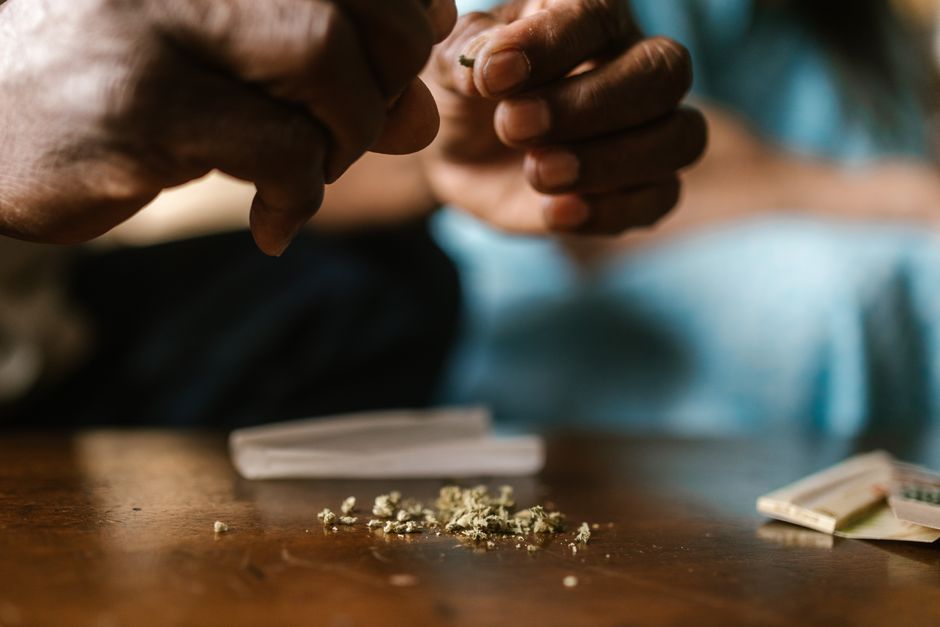 Antes de germinar, una última inspección por firmeza y color filtra los duds obvios.
Before you germinate a thing
Say the checklist sends you home with a good pack. There is one more habit worth keeping, because even a careful online buy can include a few weak seeds, and the genetics that look perfect on the page still vary bean to bean. Before you commit any of them to the medium, give each one a quick physical once-over for colour, firmness, and obvious damage. It takes a couple of minutes and catches the duds the listing could never show you; we cover the bench tests in 8 things to check before you trust a cannabis seed.
Storage is the other quiet factor. If you are not sowing the whole pack at once, where you keep the rest decides how long they stay viable. Kept cool, dark, dry, and sealed, cannabis seeds hold up for years, with a fresh pack often germinating above 90 percent and drifting toward 50 to 70 percent by the 5 year mark; left warm and bright, that decline arrives in months instead (Royal Queen Seeds on seed longevity). Treat the spare seeds as the investment they are.
The short version
None of this takes long, and that is the whole argument for doing it. Run down the list, hold each point against your own space, your own calendar, and your own local law, and an impulse buy quietly turns into a deliberate one. The seeds that disappoint growers are almost always the ones bought on a name and a number, in the 90 seconds between seeing a pretty photo and clicking. Spend the extra 10 minutes instead. By the time the pack arrives you will already know exactly why you chose it, and that confidence carries straight through to the day it goes in the soil.