No, You Don't Need Hydrogen Peroxide to Germinate Seeds: Busting a Common Myth
Spend any time reading germination threads and the advice turns up like clockwork: soak your cannabis seeds in hydrogen peroxide and they will sprout faster, shrug off rot, and crack open even when they are years old. It gets repeated so confidently that it starts to sound like settled fact. It is not. For the vast majority of growers, peroxide is a fix for a problem you do not actually have.
Let us take the claim apart honestly, for adults growing where it is legal.
Where the myth comes from
The idea is not invented out of thin air, which is exactly why it sticks. Hydrogen peroxide does two real things. It is a mild oxidiser that can kill some surface microbes, and as it breaks down it releases oxygen. Growers heard "oxygen" and "kills microbes," mentally connected those to the two biggest germination worries — rot and slow sprouting — and a tidy folk remedy was born.
The trouble is that a real mechanism does not make a practice necessary. Plenty of things technically do something without being worth doing.
What it actually does, and what it doesn't
The oxygen release is brief and minor. Peroxide breaks down quickly into water and oxygen, so any boost is short-lived and small. A healthy seed sitting in moist, airy conditions already has all the oxygen it needs to respire. You are not manufacturing more of anything useful.
The disinfecting angle is where the real risk hides. Yes, peroxide kills microbes — but a seed's protective coat is not usually crawling with anything that threatens it. Worse, at the concentrations people reach for, or if they leave seeds soaking too long, peroxide can scorch the delicate emerging taproot and stress the embryo. You can absolutely harm a seed while trying to protect it. The cure becomes the disease.
Here is the trade-off laid out plainly:
| The claim | What's really going on |
|---|---|
| Adds oxygen for faster sprouting | A quick, minor release; a moist airy medium already supplies plenty |
| Sterilises the seed against rot | Coats are rarely infected; rot comes from soggy, cold conditions instead |
| Revives old, stubborn seeds | Softens the coat, yes — but plain water does that with zero risk |
| Harmless extra insurance | Can burn the taproot at common concentrations or long soaks |
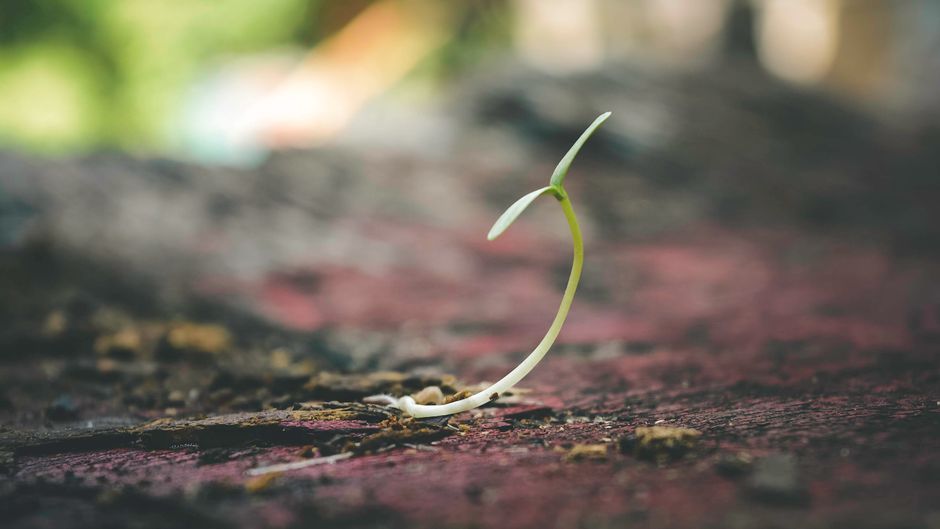 A healthy seed in moist, warm conditions does this on its own — no chemistry required.
What old seeds actually need
The most persuasive version of the myth is that peroxide revives old or tough seeds by helping them crack. There is a sliver of logic here: aged seed coats do harden, and a soak can soften them. But plain water does that job. A simple overnight soak in lukewarm water swells the coat and rehydrates the embryo just as well, without the oxidising risk. And if a seed is genuinely too old or non-viable, no peroxide is bringing it back. Chemistry cannot resurrect a dead embryo. If you suspect your stash has aged, the fix is upstream — how you store seeds for the long haul matters far more than any soak, and it is worth knowing whether old seeds really never sprout before you write a batch off.
What genuinely improves germination
If you want better germination rates, spend your attention on the basics that actually move the needle:
- Get the moisture right. Damp, never soggy. Waterlogged conditions starve seeds of oxygen far worse than peroxide could ever add it back.
- Keep it warm. Around 21–26 °C is the sweet spot. Warmth is the single biggest lever on germination speed.
- Use clean water and clean tools. This handles the hygiene concern without any chemistry at all. Filtered or dechlorinated water and a clean plate go a long way.
- Store spare seeds properly. Cool, dark, and dry. Most weak germination traces back to seeds aged by heat and humidity, not to a missing peroxide step.
- Be patient and hands-off. A seed that takes six days is slow, not dead. The ones people lose are usually the ones they fussed over.
None of that is exotic. A plain paper-towel germination station gets you warmth, moisture, and darkness with kitchen supplies, and if you want the full step-by-step there is our reliable germination method that has never needed a drop of peroxide.
Note. "It worked for me" is not evidence the peroxide did the work. A seed that would have sprouted anyway sprouts anyway — the soak just gets the credit.
So where does that leave the bottle? Peroxide is not poison, and a careful, dilute soak will not necessarily wreck your seeds. But it is an extra step with real downside and almost no upside, dressed up as essential when it is anything but. Warmth, the right moisture, clean water, and patience will out-germinate a peroxide soak every single time. Skip the chemistry experiment and let the seed do the thing it already knows how to do.