The Rise of CBD-Rich Seeds: What's Really Driving the Shift Toward Low-THC Genetics
For most of the last thirty years, breeding cannabis meant chasing one number. Catalogues bragged about THC percentages climbing season after season, dispensary shelves were ranked by potency, and the headline genetics were always the strongest in the room. If a strain tested under twenty percent, it was treated as a beginner's plant or an embarrassment.
That story has quietly fallen apart. CBD-rich and low-THC seeds, once a footnote tucked at the back of the catalogue, have become one of the fastest-growing categories a seed bank stocks. Some shops now devote a whole tab to them. It is worth asking what is actually behind that, because it is not one trend doing the work. It is several, all pulling in the same direction at once, and a couple of them are more interesting than the "wellness boom" headline you usually hear.
Here is the why, written for adults growing where it is legal.
A different kind of grower is showing up
Start with who is planting seeds now, because the audience has changed more than the plants have.
Cannabis has gone mainstream across a lot of the world, and legalisation pulls in people who never came for the high in the first place. Older gardeners who treat it like any other crop. Hobbyists who garden for the sake of gardening. People managing aches, sleep, or low-grade stress who want something gentler than what their pharmacy hands them. None of those people are looking for the strongest plant they can find. A fair number are actively trying to avoid it.
CBD does not get you intoxicated the way THC does. A CBD-rich plant feels approachable to someone who is cautious about getting too high, or who wants to stay clear-headed through a working day. That single fact opens the door to a much wider group of growers, and when the audience widens, the demand for genetics widens with it. Seed banks are commercial operations. They stocked what people started asking for.
There is a generational angle here too. A lot of the new interest comes from people who already use CBD in some bought-and-sold form, a tincture, a balm, a gummy, and who reach the obvious next thought: why am I paying a premium for this when I have a windowsill? Growing a CBD-rich plant from seed is the cheapest CBD you will ever get your hands on, and that economic logic is quietly persuasive.
The science finally caught up to the demand
This is the part that gets skipped, and it is the most important. Twenty years ago, the demand could have existed and the seeds still would not have. Finding a stable high-CBD line was genuinely hard, because decades of selection had bred CBD almost out of the drug-type gene pool.
To see why, you have to look at how the plant makes these compounds. Cannabis does not produce THC and CBD directly. It produces a precursor, CBGA, and then enzymes convert that precursor down one path or another. One enzyme, THCA synthase, turns the precursor into THCA, which becomes THC. A different enzyme, CBDA synthase, turns the same precursor into CBDA, which becomes CBD. The two enzymes are competing for the same raw material.
Which enzyme a plant makes is controlled by what geneticists treat as a single locus, usually labelled B, with two codominant alleles. Inherit two copies of the THC-type allele and you get a THC-dominant plant. Two copies of the CBD-type allele and you get a CBD-dominant plant. One of each and you get a roughly balanced plant making both, because the alleles are codominant rather than one masking the other. Cross two balanced plants and the offspring segregate in a tidy 1:2:1 ratio, which is exactly the pattern researchers find when they screen seed populations. (Onofri et al. and others have mapped this single-locus codominant model.)
Note. This is also why "high-CBD" and "high-THC" are not opposite ends of one dial you can freely turn. They are two enzymes competing for the same precursor. Push hard toward one and you genuinely lose the other, which is why the truly CBD-dominant lines have so little THC: the plant is barely making the enzyme that would produce it.
All of this conversion happens in the same place: the glandular trichomes, the tiny resin heads that frost a mature flower. The plant does not keep a CBD factory and a THC factory in separate rooms. It runs one resin chemistry, fed by one precursor, and the enzymes it happens to carry decide where that precursor ends up. That is the deeper reason the trichome is worth watching so closely, and why so much of a strain's identity comes down to what is actually going on inside those resin glands.
The practical consequence is this. Once breeders understood the inheritance, building a reliable CBD line stopped being luck and became a process. They went back to old landrace stock and certain fibre and hemp lines that still carried strong CBD-type alleles, crossed those into modern, growable plants, and then stabilised the trait over generations. It is slow work: you are selecting for an invisible enzyme balance you can only confirm with a lab test, generation after generation, until the offspring stop throwing surprises. If you want a deeper feel for why those old populations were so valuable, the case for preserving original landrace genetics leans heavily on exactly this kind of stored diversity. Without that reservoir, the CBD revival would have had nothing to build from.
It also explains why early CBD seeds had a reputation for inconsistency. A cross that has not been stabilised is still segregating at that B locus, so a single pack could throw CBD-dominant plants, balanced plants, and the occasional THC-leaning surprise from the same parents. Modern reputable lines have done the unglamorous generations of work to lock the ratio down. That difference, between a hastily made cross and a properly fixed line, is most of what you are paying for when one pack costs three times another.
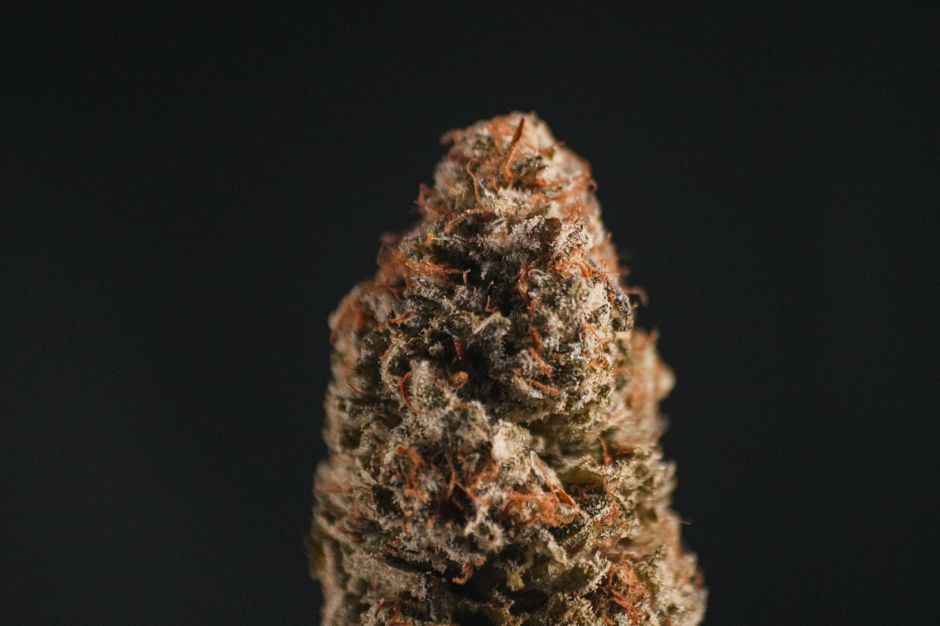 CBD and THC form in the same resin glands, from the same precursor.
The ratio is the whole game
Once stable lines existed, the result was not a single "CBD seed." It was a spectrum, and learning to read it is the most useful thing a buyer can do.
The figure that matters is not the CBD percentage on its own. It is the ratio of CBD to THC. That ratio shapes the character of the plant far more than any raw number, and it maps directly onto the genetics above.
| Rough ratio (CBD:THC) | Genetic shorthand | What it tends to feel like |
|---|---|---|
| ~1:1 | Heterozygous, one allele of each | Gentle and balanced; a little of both, very approachable |
| ~2:1 to 4:1 | CBD-leaning | Clearly CBD-forward with a soft THC edge |
| ~20:1 and beyond | CBD-dominant homozygous | CBD almost entirely; THC barely present |
A balanced 1:1 plant and a 24:1 CBD-dominant plant are completely different experiences, even though a careless catalogue might file them under the same "CBD" heading. Decide which end you want before you buy, not after. If you want the longer tour of named lines that sit at different points on this scale, the rundown of high-CBD strains worth knowing walks through where the well-known ones land.
That precision simply did not exist at retail scale before. Having real, labelled choices on the shelf is itself part of what feeds the trend: people buy what they can actually pick.
Legality nudges the genetics
Here is a driver that is easy to underrate. In a great many places, the legal line between "this is fine" and "this is a controlled crop" is drawn at a THC threshold, and CBD-rich genetics sit comfortably on the right side of it.
The numbers matter. In the United States, the 2018 Farm Bill defined hemp as cannabis with no more than 0.3 percent delta-9 THC by dry weight. The European Union ran at a stricter 0.2 percent for years, then raised its limit to 0.3 percent in 2023 to line up with the US, Canada, and China. These thresholds are why a plant can be legal to grow as "hemp" while a higher-THC version of the same species is not.
For a grower, low-THC genetics turn that legal line from an obstacle into something workable. People plant what they are allowed to plant, and a CBD-dominant seed is far more likely to stay under a hard THC cap than a drug-type one. None of this is legal advice, and the rules shift constantly, by country, by state, sometimes by season. The US, for instance, has been moving to count total THC including THCA rather than delta-9 alone, which changes the maths for some lines. Check your own jurisdiction before you put anything in the ground. But the broad point stands: regulation has quietly made CBD-rich genetics the practical default for a whole class of growers who simply want to stay on the right side of the rules.
The arms race for potency was always partly a market story. Low-THC seeds are partly a regulatory one. Both forces are real, and they happen to point the same way.
What growers actually notice in the garden
Strip away the science and the law for a moment, because there is a quieter, hands-on reason these plants keep selling: a lot of them are pleasant to grow.
Because many CBD-rich lines were built on hardy landrace and hemp backgrounds, growers often describe them as vigorous and forgiving, the sort of plant that shrugs off a missed feed or a clumsy week. That ruggedness is not guaranteed in every line, but it shows up often enough to be a pattern, and it makes CBD-rich seeds an easy recommendation for someone still finding their feet. If you are at that stage, the same forgiving quality is what drives the appeal of beginner-friendly strains that tolerate most mistakes.
The aroma is the other pleasant surprise. When you stop selecting purely for maximum THC, you free up the plant's energy and the breeder's attention to chase flavour. Some of the most interesting terpene profiles on the market now sit on CBD-rich plants, precisely because nobody was forcing those lines toward a single potency target. If you are the kind of grower who values how a plant smells over how hard it hits, that is a genuine draw, and it is no accident that seed banks have started breeding for terpenes rather than just THC across the board.
There is a practical knock-on for how these plants behave through a grow, too. Many CBD-rich lines carry a lot of sativa-leaning, equatorial heritage from their landrace and hemp parents, which can mean taller, stretchier plants and slightly longer flowering than a compact indica-dominant strain. None of that is a problem if you plan for it, but it is the sort of thing worth knowing before you commit a small tent to one. And it is a useful reminder that "CBD-rich" describes the chemistry, not the structure: the old indica-makes-you-sleepy, sativa-lifts-you-up shorthand tells you even less about a plant than usual once you are dealing with these crosses. Read the grow notes, not the label's vibe.
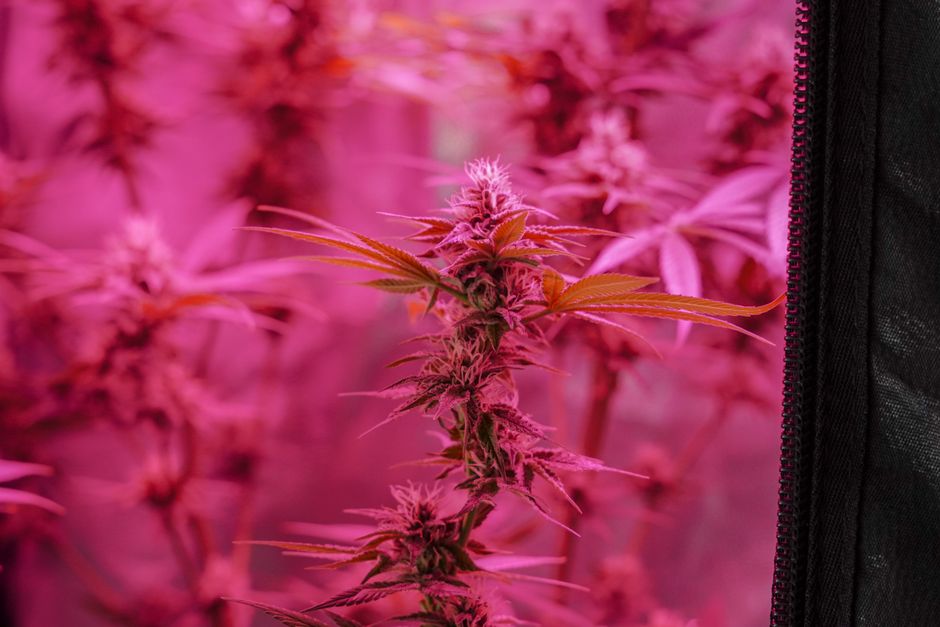 Many CBD-rich lines come from hardy backgrounds and grow vigorous and forgiving in the garden.
A worked example: reading a real seed pack
Say two packs sit in front of you. One reads "CBD 12%, THC 6%." The other reads "CBD 15%, THC 0.5%."
A buyer chasing the biggest CBD number grabs the second pack and assumes it is simply "more CBD." But look at the ratios. The first is roughly 2:1, a CBD-leaning plant that still carries a meaningful, noticeable amount of THC, around what a mild recreational flower might have. The second is roughly 30:1, effectively a CBD-only experience with a trace of THC that most people will not feel at all.
If you wanted a gentle, clear-headed plant with no real high, the lower-CBD pack would have been a surprise in the wrong direction. The number that looked smaller, the THC figure, was the one that decided the character. That is the entire argument for reading the ratio first, every time.
A market correcting itself
Step back and the rise of CBD-rich seeds looks less like a fad and more like a correction.
For two decades the THC race ran like most arms races do, and like most arms races it overshot what a lot of people actually wanted. The strongest possible plant is a great product for some growers and beside the point for many others. CBD-rich genetics filled a gap that was arguably there the whole time, hidden only because the seeds to fill it did not exist yet. The science, the law, and a broader audience arrived close enough together that the category went from impossible to obvious in about a decade.
The high-THC classics are not going anywhere; nobody is replacing them. But the shelf is wide enough for both now, and the steady, unspectacular climb of CBD-rich seeds, year after year rather than in a single spike, is what a category settling in for the long haul actually looks like. Fads spike and fade. This one keeps adding a percent of shelf space at a time.
A few honest questions growers keep asking
Will a CBD-rich plant get me high at all? A strongly CBD-dominant line, something around 20:1 or beyond, has so little THC that most people feel no intoxication. A balanced 1:1 plant is a different matter and can absolutely produce a mild, clear effect, because it still carries real THC. The ratio tells you which you are dealing with.
Are CBD-rich plants harder to grow than high-THC strains? Generally no, and often the opposite. High CBD does not mean high effort. Many lines are vigorous and forgiving thanks to their hardy parentage, but they still need the basics done well: decent light, sensible feeding, and a patient cure. Treat them like any quality plant, not like a houseplant that looks after itself.
Can a CBD-rich plant turn out higher in THC than the pack claims? Cannabinoid content varies with genetics, growing conditions, and how late you harvest, so treat any published figure as a guide rather than a guarantee. With fresh or unstable crosses the spread can be wide. If staying under a legal THC threshold genuinely matters to you, that variability is a real reason to buy from a properly stabilised line rather than a cheap mystery cross.
Is buying CBD-rich seed any different from buying normal seed? The same caution applies as with any purchase: read the genetics, not just the marketing. The general checklist for buying cannabis seeds online holds here too, with the one extra step of confirming the ratio rather than fixating on a single cannabinoid number.
The short version of all of it: a different audience showed up, the genetics finally existed to serve them, the law quietly rewarded the low-THC end, and the plants turned out to be a pleasure in the garden. None of those alone would have done it. Together they took a back-of-the-catalogue curiosity and made it one of the most interesting corners of the modern seed shelf.